- FireStarters - The Nichefire Newsletter
- Posts
- Cultural Triage: The Job No One Trained You For
Cultural Triage: The Job No One Trained You For
Between infinite signals and finite decisions.

Nichefire Newsletter
February 27, 2026
In partnership with

Culture is always out in front of us.
It’s in the Reddit threads you go through for answers.
In your screenshots folder.
In the 17 tabs you swear you’ll come back to.
And increasingly, it’s in the platforms we engage with.
But here’s the uncomfortable truth:
Your algorithm is not a cultural strategy. Your timeline is not a “trend report.” It’s not enough, and it’s too skewed to be reliable.
And if you’re in a Cultural Intelligence, Insights, or Innovation role, you already feel this tension every day as you find signals, then decide what needs immediate attention, what deserves your attention next month, next year, and what to ignore.
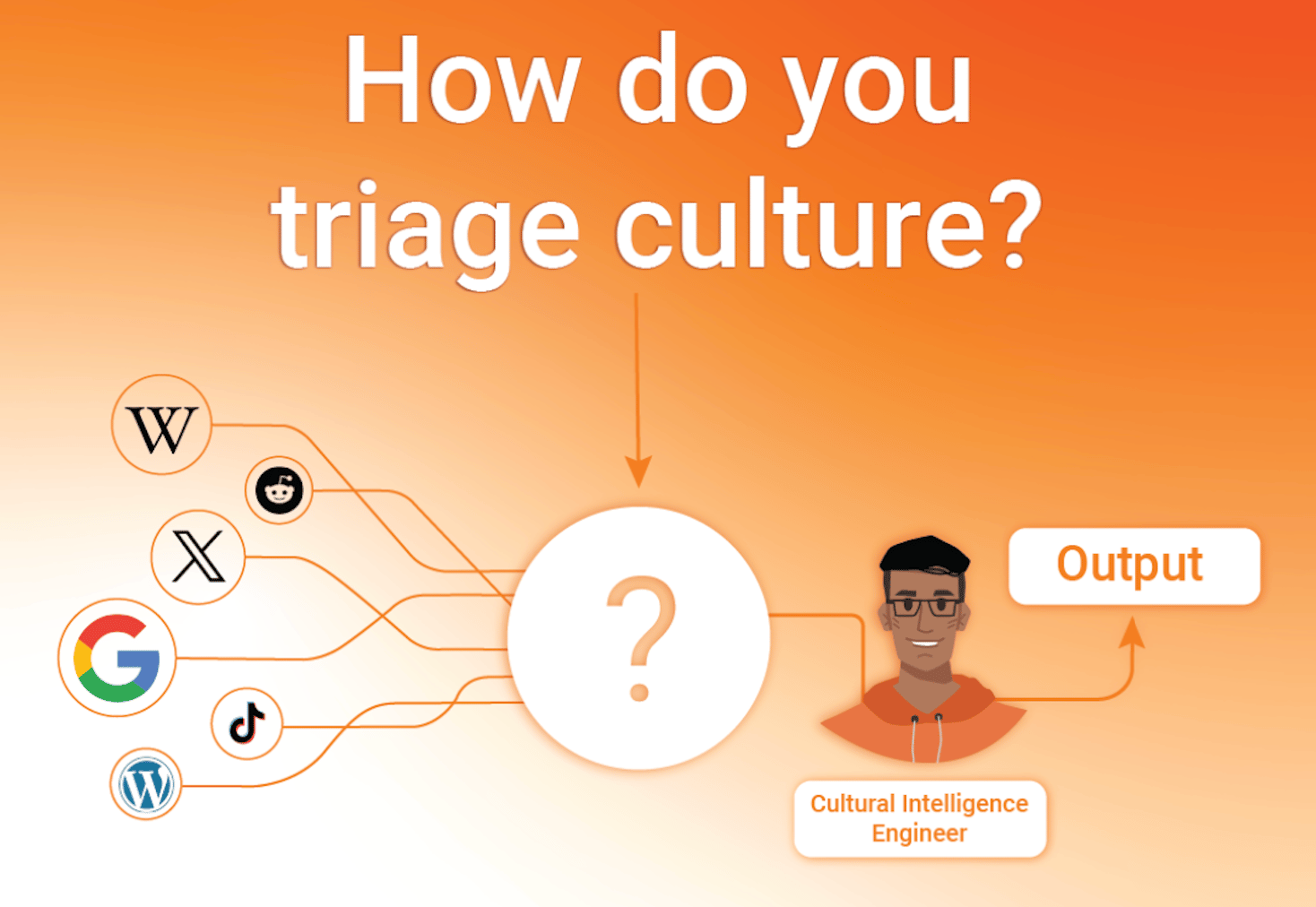
You sit between chaos and decisions.
On one side:
Hundreds of signals. Articles. TikToks. Discord threads. Data dashboards. AI summaries.
On the other:
A room of stakeholders asking, “So what do we do?” or "My niece showed me this TikTok — should we jump on this?”
You have limited time. Limited context. And zero tolerance for being wrong.
The work is fast judgment:
What matters vs. what’s noise
What’s emerging vs. what’s peaking
What’s culturally meaningful vs. what’s algorithmically loud
It’s cultural triage.
And without it, teams don’t move faster. They just move louder. Keep scrolling to see the mistake so many make.
How Marketers Are Scaling With AI in 2026

61% of marketers say this is the biggest marketing shift in decades.
Get the data and trends shaping growth in 2026 with this groundbreaking state of marketing report.
Inside you’ll discover:
Results from over 1,500 marketers centered around results, goals and priorities in the age of AI
Stand out content and growth trends in a world full of noise
How to scale with AI without losing humanity
Where to invest for the best return in 2026
Download your 2026 state of marketing report today.
Get Your Report
Why Your Feed Is Lying to You
In a recent internal discussion, we talked about something that doesn’t get said enough:
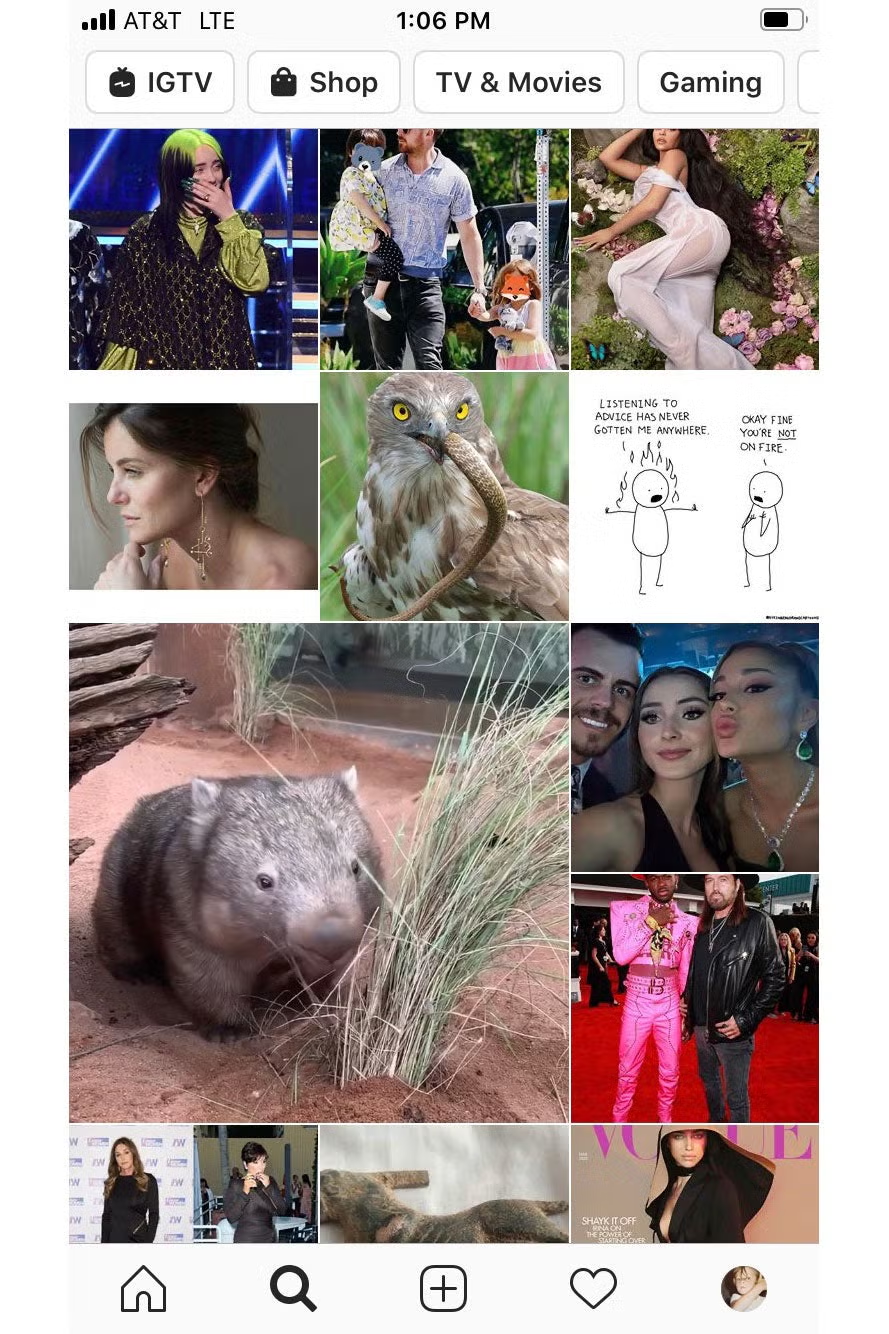
If you rely on your algorithm to triage culture, you are already skewed.
Your feed is optimized for:
Engagement
Emotional spikes
Content that confirms your existing behavior
It is not optimized for:
Early weak signals
Cross-community diffusion
Cultural depth
Commercial relevance
When your only filter is your timeline, you mistake visibility for velocity.
You mistake virality for durability.
And you start building strategy around the loudest thing in the room.
That’s not intelligence.
That’s amplification.
If not my algorithm, where?
At Nichefire, we analyze thousands of cultural conversations across platforms, surfacing patterns before they become obvious.
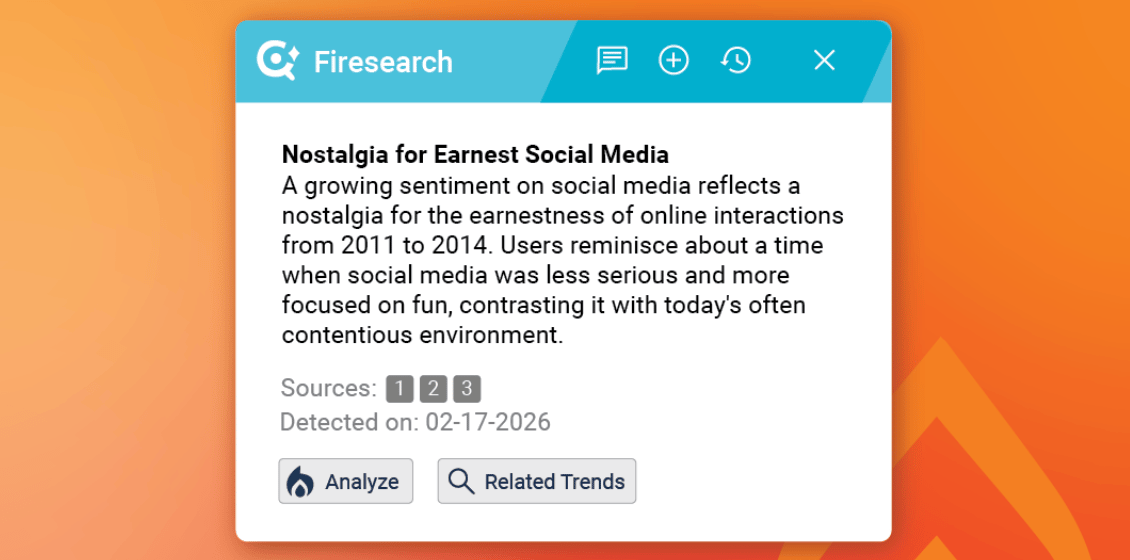
Instead of relying on what your timeline shows you, you can:
Search themes tied to your brand or category
Track emerging behaviors across communities
Cluster scattered signals into coherent drivers
Move from “interesting” to “actionable”
Think of Nichefire as a funnel.
Culture at the top.
Clarity at the bottom.
It takes everything, and turns it into something you can actually use to make decisions.
Case Study: “Culture Comforts”
Let’s break this down using the Culture Comforts movement as an example. (Access the deck here)
At first glance, the signals look scattered:

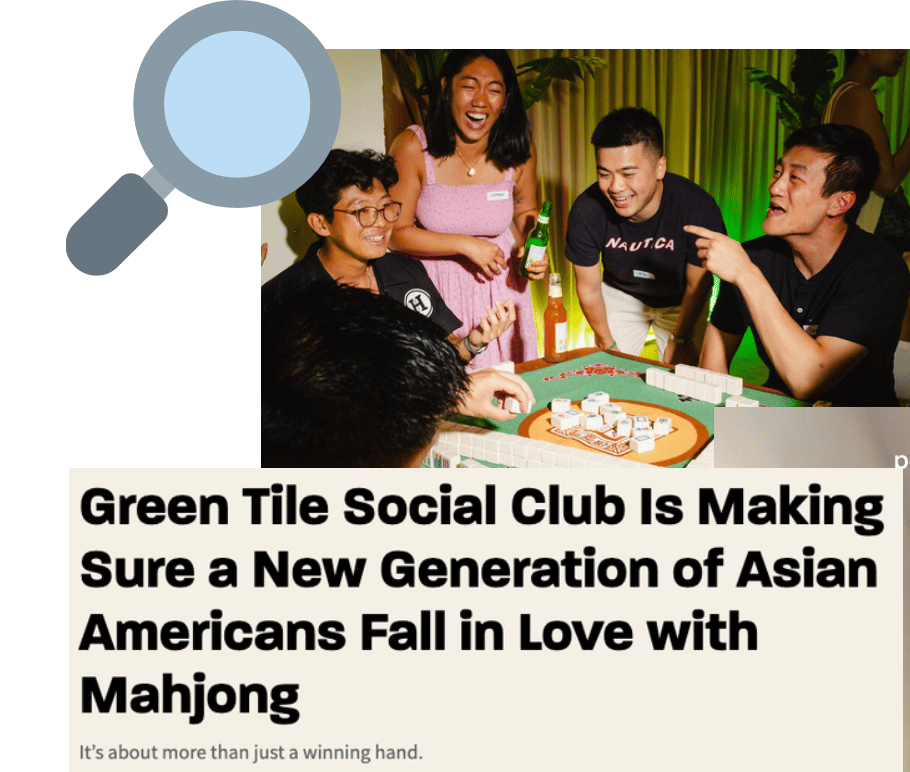
Young Asian Americans revisiting ancestral traditions
Gen Z returning to church spaces
Global cuisines becoming simply “food”
Cultural holidays gaining mainstream visibility
Rejection of algorithm-assigned identities
If you were just scanning headlines, it might feel like:
Religion is trending.
Asian culture is trending.
Diaspora content is trending.
Tradition is trending.
Lots of signals, no clear next step. But that’s still feed-thinking.
The deck reframes it.
On page 6, we highlighted the throughline that Nichefire’s AI analyzed:
In an era of instability and isolation, consumers are peppering their present-day routines with traditions and practices from their past to find connection, kinship, and shared identity.
Now we’re no longer looking at isolated spikes.
We’re looking at a structural driver.
On page 7, the cultural drivers make it explicit:
Search for Stability
Digital Sea of Sameness
Identity Pride
This is not about church attendance.
It’s not about mahjong.
It’s not about Lunar New Year aesthetics.
It’s about cultural anchoring in a destabilized era.
That shift—from content to driver—is cultural triage.

If this feels familiar…
If cultural triage feels way harder than we’ve made it out to be, you’re not behind…
If you feel like you’re pretending to be “attuned to culture while not really knowing your next step…
You’re not bad at your job.
You’re operating in an environment with:
Infinite inputs
Compressed timelines
Stakeholders who equate volume with insight
The problem isn’t signal abundance.
It’s the absence of structured triage.
Culture will always be out in front of us.
The question is whether we’re reacting to what’s loud, or engineering clarity from what’s meaningful.
Next week, we’ll break down the actual triage framework we use to move from raw signal to executive-ready insight.
Because in this era, speed doesn’t win.
Discernment does.