- FireStarters - The Nichefire Newsletter
- Posts
- Culture Is a Leading Indicator. Are You Using It Like One?
Culture Is a Leading Indicator. Are You Using It Like One?
"Predictive insights" aren't a thing if you don't understand consumer motivation.

Nichefire Newsletter
February 20, 2026
In partnership with

We’ll cut to the chase. We’ve been seeing that most teams treat culture like a branding input.
But that’s only 10% of its power. Smart brands treat it like a predictive engine.
If you wait for sales data to validate a shift, you’re already late.
If you wait for syndicated research to confirm it, you’re competing in a red ocean.
Culture moves first.
Behavior follows.
Markets reorganize around it.
The real question is: are you reading the signal early enough to build against it?
Prediction hiding in plain sight
Below is a real Nichefire signal based on an analysis of consumer conversations:
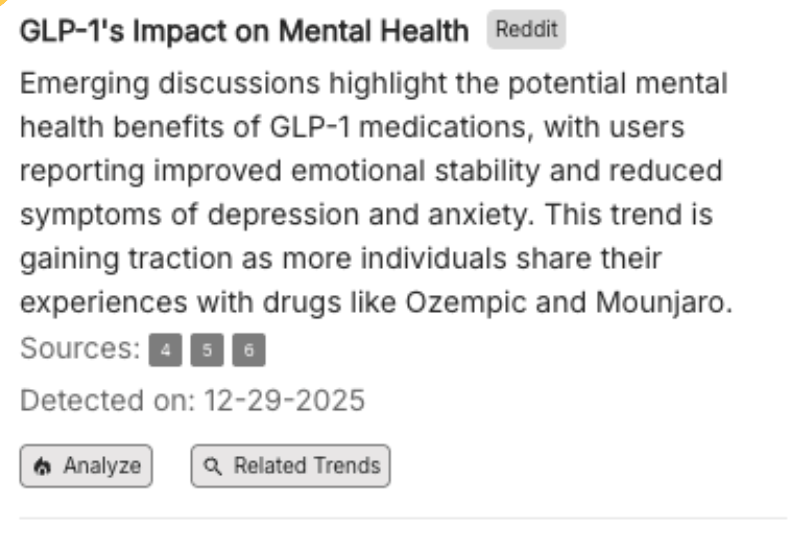
GLP-1 medications are being discussed not just for weight loss — but for emotional stability, reduced anxiety, and mental clarity.
Pause for a second.
If you were seeing this in real time, before the headlines, before the case studies, what would you predict?
What industries are affected beyond pharma?
What adjacent behaviors shift?
What identity narratives evolve?
What categories quietly get disrupted?
This is where most companies stop at “interesting.”
The predictive move is asking:
What second- and third-order effects does this unlock?
Because cultural shifts don’t stay contained. They cascade.
Become An AI Expert In Just 5 Minutes

If you’re a decision maker at your company, you need to be on the bleeding edge of, well, everything. But before you go signing up for seminars, conferences, lunch ‘n learns, and all that jazz, just know there’s a far better (and simpler) way: Subscribing to The Deep View.
This daily newsletter condenses everything you need to know about the latest and greatest AI developments into a 5-minute read. Squeeze it into your morning coffee break and before you know it, you’ll be an expert too.
Subscribe right here. It’s totally free, wildly informative, and trusted by 600,000+ readers at Google, Meta, Microsoft, and beyond.
Now here’s how the insight above gets turned into something…
Using the GLP-1 example, here’s a simple example of how you’d turn signal into a strategy (with minimal effort):
1️⃣ Identify the Cultural Drivers
From the broader Food Freedom shift, we see:
Destigmatization of weight management
Rejection of restrictive diet culture
Identity untethered from body metrics
Appetite as experience, not obsession
This reframes the consumer relationship with food, self-control, and emotional bandwidth.
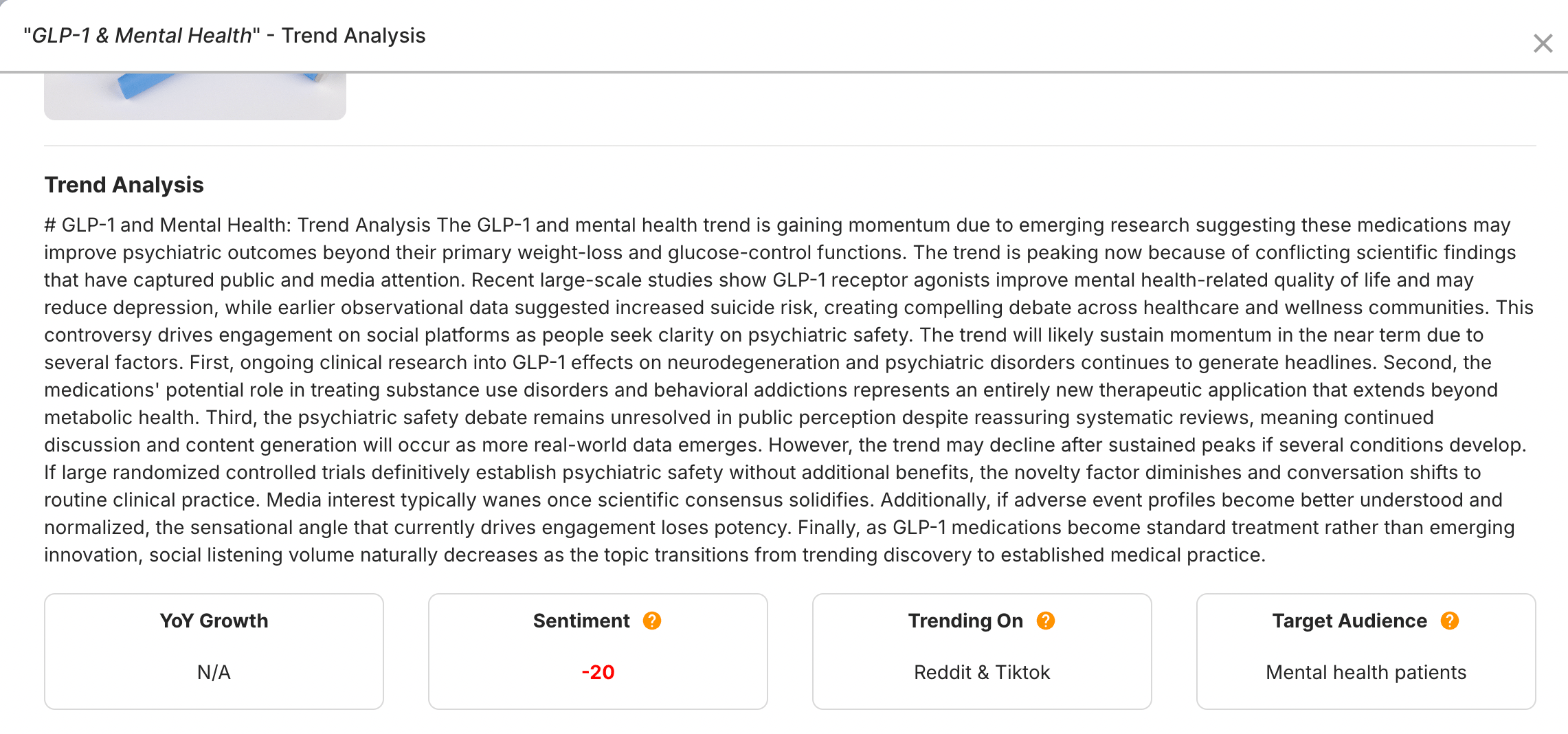
2️⃣ Define the Emerging Archetypes
Appetite Adventurers — experiencing food with less guilt
GLP-1 Adjacent — reshaping dining norms even if not medicated
Consumers with reclaimed mental bandwidth
Now you’re not targeting “women 25–45 interested in health.”
You’re targeting identity shifts.
3️⃣ Use AI to Generate Product Hypotheses
This is where most teams underutilize AI.
Instead of generic brainstorming prompts, you feed AI structured cultural insight:
Example Prompt Framework:
“Based on a cultural shift toward food freedom, reduced appetite fixation, and increased emotional calm among GLP-1 users, generate product concepts for:
– Quick service restaurants
– Functional beverage brands
– Mental wellness apps
– Premium grocery retailers
Prioritize second-order effects and unmet identity needs.”
Because you’re seeding AI with cultural context, it stops giving surface-level ideas and starts generating viable market plays.
For example:
Portion-flexible dining models
“Micro-indulgence” premium food formats
Social dining experiences designed for appetite variance
Cognitive-performance products positioned around reclaimed bandwidth
The quality of output is only as good as the signal you input.
Nichefire provides the signal layer.
AI accelerates the ideation layer.
Together, they become a predictive engine.
Interested in our GPTs?
Nichefire’s cultural GPTs were built for explosive moments exactly like this. They are the closest thing to “Nichefire Lite” that exists. But they still pack a massive punch. Try using them to get a faster read on activation ideas:

Deep dive: “Food Freedom.”
If the GLP-1 conversation feels like “just a pharma story,” you’re missing the larger shift.
The full cultural analysis, drivers, audiences, and brand implications are in our latest deck:

Inside:
Cultural Drivers (Semaglutide Successes, Diet Culture Detox, Identity Untethering)
Affected Audiences (Appetite Adventurers, GLP-1 Adjacent)
Brand Guardrails (Champion, Don’t Shame)
Long-term category implications
This shift is all about how control, pleasure, identity, and consumption are being renegotiated.
And that has ripple effects across food, hospitality, wellness, retail, media, and beyond.
Before we forget, the meme of the week…
We’re not sure what this is saying about culture - but it is funny. Any ideas?

The question we want to leave you with…
Most companies ask: “What’s trending?”
The better question is: “What is this trend predicting?”
Cultural intelligence is not a content strategy. It’s a forecasting system.
The teams that build against emerging identity shifts, not lagging data, lower CAC, launch into pull, and create categories instead of chasing them.
If you’re ready to use culture as a leading indicator instead of a retrospective report, let’s talk.
—
That’s it for this week - we’ll be back next week with more of the same.