- FireStarters - The Nichefire Newsletter
- Posts
- Cut CAC by Targeting “How” (Not “Who”)
Cut CAC by Targeting “How” (Not “Who”)
Most brands pay for wasted impressions. Here’s the cultural OS approach that makes CAC fall.

Nichefire Newsletter
February 13, 2026
In partnership with

Welcome back to FireStarters—what if your lowest-cost acquisition channel isn’t a channel at all… but culture itself?
Most acquisition strategies wait for demand to form.
Cultural intelligence spots the signals that create demand, so you show up earlier, cheaper, and with authority.
Today, we want to reframe why this works in a way you can’t unsee:
The core Inefficiency: paying for “Who” instead of “How”
Most brands don’t have a CAC problem. They have a definition problem.
They treat culture as a targeting layer built on demographics:
“We need to reach Hispanic Gen Z.”
“We need more millennial moms.”
“We need urban professionals.”
But demographics describe who people are. Culture describes how people behave.
And behavior is what buys.
The hidden cost: when you target a demographic, you’re paying to reach a massive group where only a fraction actually shares the specific ritual, belief, or routine your product is built for.
You don’t lose because your CPM is high.
You lose because you’re buying wasted impressions inside a segment that looks right on paper.
The fix: Lower CAC by targeting the “operating system” first—
the shared beliefs, behaviors, language, and rituals that shape decision-making.
When you target the behavior, you stop paying for everyone in the segment who doesn’t do the thing. More on that below →
Better prompts. Better AI output.
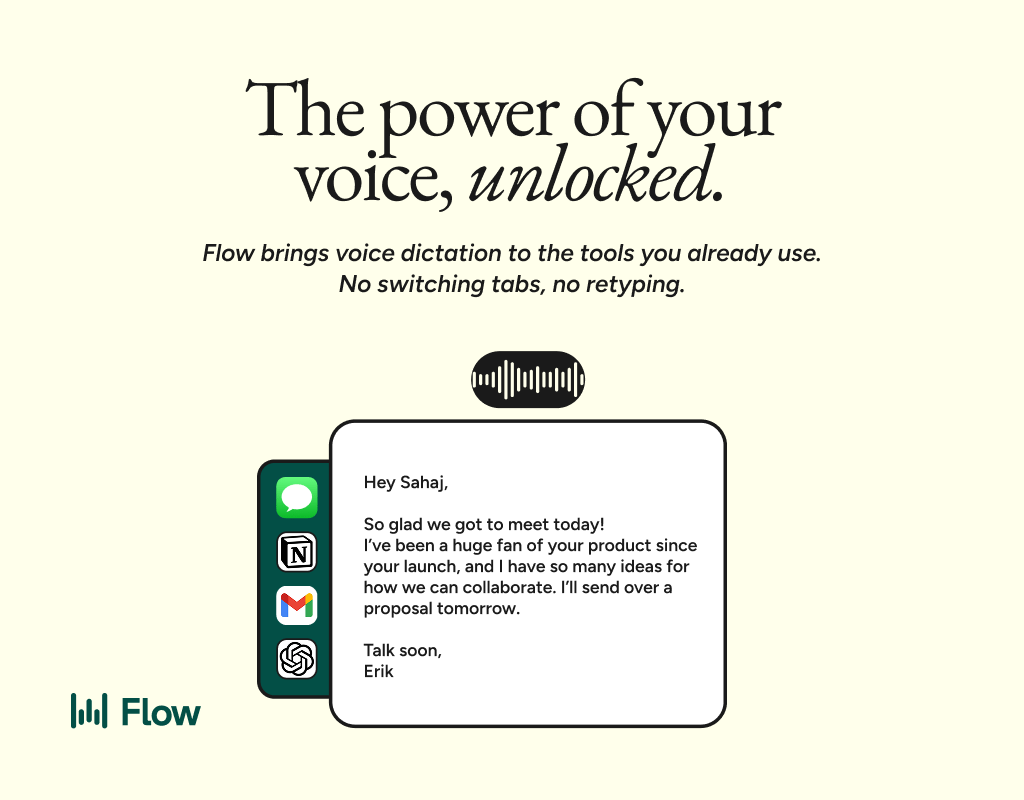
AI gets smarter when your input is complete. Wispr Flow helps you think out loud and capture full context by voice, then turns that speech into a clean, structured prompt you can paste into ChatGPT, Claude, or any assistant. No more chopping up thoughts into typed paragraphs. Preserve constraints, examples, edge cases, and tone by speaking them once. The result is faster iteration, more precise outputs, and less time re-prompting. Try Wispr Flow for AI or see a 30-second demo.
From Lil’ Signals with Khalil: Culture as an OS

At Nichefire, we define culture like this:
Culture is the shared beliefs, behaviors, attitudes, gestures, language, and rituals that shape how people make decisions.
That definition forces a better question:
Instead of “Who is the customer?” ask:
“What are they doing repeatedly—and what meaning are they assigning to it?”
Because culture isn’t biology. It’s learned, practiced, and reinforced by environment.
(Which is why identity-based shortcuts often miss the actual driver of choice.)
How Nichefire lowers CAC: Signals → Behavior → Product (before it gets expensive)
Here’s the mechanism that makes CAC drop:
Culture doesn’t show up first as a segment. It shows up as signals.
People leave traces of change in what they:
Discuss (conversation + discourse)
Search (intent)
Amplify (influence)
Nichefire aggregates signals across platforms, search behavior, blogs, and news—blending what people say with what they actively go looking for.
That’s the difference between:
Reactive marketing (fight for attention once the trend is saturated), and
Foresight marketing (enter the story while it’s still cheap)
Why early content wins: it enters low-competition spaces, earns organic reach more easily, and anchors your brand to the movement before it becomes crowded.
Or in one line:
Early signals → earlier content → lower CAC.
Let’s try an exercise - taken straight from a screenshot of Nichefire’s dashboards. The cultural movement below is a screenshot is aggragated from a range of cultural signals. Think about it:
1) What are the immediate “trends” that a brand might jump on that would be high CAC?
2) What are the “future” opportunities that this signal may suggest?
3) How many brands are already playing in the future opportunity?

(Scroll to the bottom for more on this cultural movement - or download the report on Audacious Optimism to see if you were right )
A Practical Playbook: Target “How” in 15 Minutes
Okay but what if you don’t use Nichefire? If you want to put this into motion this week, do this:
1) Write the behavior, not the persona
Bad: “Health-conscious women 25–34”
Good: “People replacing a nightly ‘wind down’ drink with a new ritual”
2) Name the ritual + the why
Ask:
What are they doing?
What are they trying to feel?
What are they avoiding?
What’s the new “status” signal?
(Example from our recent work: celebration rituals shifting toward connection without excess—new forms of celebration, not less celebration.
3) Seed content where the ritual already lives
Don’t start with ads. Start with:
language people are using,
questions they’re asking,
creators they’re already trusting,
formats that match the ritual.
Then paid becomes a multiplier, not the engine.
Okay now for a bit fun…
We’re adding a new regular segment to the newsletter: Meme of the week.
Are we claiming it will be groundbreaking stuff? Not necessarily. But memes can be the most visible signals of cultural movements.
Each week we’ll pick out one that’s funny - and points to something different.

This is a joke, but it’s also a tiny protest against an old social rule that’s getting more expensive every year:
The “wedding industrial complex” is colliding with affordability. People still want to show love, but they’re side-eyeing the expectation stack: engagement trip → bach weekend → bridal shower → wedding → registry → travel → PTO.
Reciprocity norms are being renegotiated. The meme flips the script: “You’re the one gaining resources—why am I paying?” It’s not literal—it’s a signal that the traditional giver/receiver roles feel misaligned now.
Status rituals are moving from “generosity” to “fairness.” You can feel the new value system: less “do what’s proper,” more “does this make sense?”
And… a new resource from our cultural library

Don’t need convincing? Get the report →
Audacious Optimism Report: We’re seeing a resurgence in conversations romanticizing the early 2010s—especially the return of what used to be mocked as “cringe millennial optimism,” now reframed as earnestness people actually miss.

In our Audacious Optimism report, we track how Gen Z is increasingly idealizing that era’s “carefree” vibe (pre-surveillance social media, less irony, more sincerity) and why this matters: in a doom-fatigued moment, optimism is becoming a defiant cultural stance, not a personality trait.
Enough of the memes?
At least for this week. We’ll see you next week for cultural insights you can take into the board room.