- FireStarters - The Nichefire Newsletter
- Posts
- How do you sell culture to your boss?
How do you sell culture to your boss?
The final boss of cultural listening.

Nichefire Newsletter
March 27, 2026
In partnership with


A lot of good ideas don’t die because they’re wrong; they’re poorly marketed internally.
The gut feelings are there, but there just isn’t enough to get them through the boardroom.
Not because leadership is anti-culture.
But what sounds obvious to the person closest to the signal often sounds fuzzy, risky, or “interesting but non-essential” to everyone else.
OR, data from social listening tools just seems too… tactical for those who are thinking 3-5 years out.
And if you can’t answer it in the language leadership cares about, the idea usually dies right there.
Cultural triage is step one. Output is step two.
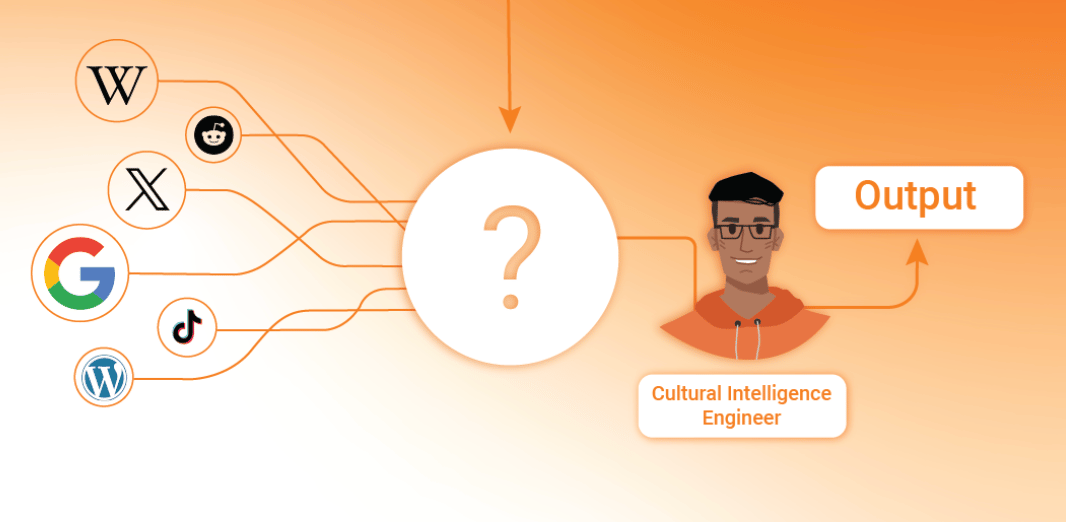
Cultural triage is about reducing chaos.
There are too many conversations, too many aesthetics, too many micro-signals, too many false positives.
The job is to sort through the noise and figure out:
What’s actually happening
Why it’s happening
Which behaviors are shifting
And whether any of it matters to your business
That alone is hard enough.
But once you’ve done that, you run into a different problem:
Now you need to sell the meaning of that signal to people who weren’t in the room when you found it.
And that’s where smart teams often lose.
Because leadership rarely buys culture on its own.
They buy:
growth
retention
brand relevance
lower CAC
faster innovation
reduced risk
stronger positioning
So if you’re pitching “a cultural idea,” you’re already one layer too abstract.
Cultural Intelligence Engineers know the signal, then they translate it into consequences.
One of the biggest mistakes insight teams make is presenting culture like it should be self-evidently important.
Something like: “We’re seeing a growing conversation around [insert topic].”
Okay.
And?
That’s not a business case. That’s an observation.
Leadership doesn’t need a better feed.
They need a reason to care.
The job is not just to say: “this is trending.”
The job is to say: “If this behavior keeps accelerating, here’s what changes for our category, our customer, and our next move.”
That’s the difference between interesting intelligence and fundable intelligence.
Take a look at the deck below to see an example of cultural signal → business consequence.
C-Suite Ready Deck: Food Freedom

In a world where more people have the chance to combat obesity, the entire cultural conversation around body image is shifting.
Conversation about body size is no longer stigmatized, transparency about how goals were achieved becomes normalized, and resorting to extreme self-deprication behaviors becomes discouraged.
That’s what’s going on, and it has crucial implications for brands.
Email Still Wins. Here's How to Use It Better.

59% of Americans say most marketing emails offer no real value. That's not a threat, it's an opening. Get the AI-powered playbook for building email campaigns that actually convert.
Inside you'll discover:
How top brands achieve 3,600% ROI from email marketing
AI personalization techniques that drive 82% higher conversion rates
Tactics that have delivered 30% better open rates and 50% higher clickthroughs
How to build sequences for every stage of the customer journey, from welcome to re-engagement
Download your free AI-powered email marketing playbook today.
Anatomy of a strong cultural pitch
A good cultural pitch has 4 parts.
If you want an idea to move upward, it usually needs to answer four questions:
1) What are we actually looking at?
Define the signal clearly.
Not the meme.
Not the aesthetic.
Not the viral artifact.
The underlying shift.
What belief, behavior, anxiety, aspiration, or identity change is emerging?
If you can’t name that cleanly, leadership will feel the ambiguity immediately.
2) Why does it matter now?
This is where most culture work gets hand-wavy.
You need urgency without hype.
What changed recently that makes this newly relevant?
Maybe:
consumer behavior is shifting
adjacent categories are already moving
your audience is reframing value
your current messaging is becoming less resonant
a risk window is opening
Culture gets easier to fund when it’s framed as timing, not just insight.
3) Where does it touch the business?
This is the bridge.
Not every cultural shift belongs in a social post.
Some belong in:
messaging
positioning
innovation
partnerships
customer experience
retail
media strategy
audience expansion
This is where you stop asking,
“Can we make content about this?”
and start asking,
“What business lever does this change?”
That’s a much more senior conversation.
4) What’s the lowest-risk way to act on it?
Executives don’t hate new ideas.
They hate ideas that arrive with vague upside and undefined downside.
So don’t sell the biggest possible move first.
Sell the smallest credible test.
Not: “We should completely reposition around this.”
More like: “We should pressure-test this through one campaign, one audience segment, one message architecture, or one pilot concept.”
That changes the conversation from approval to experimentation.
And experimentation is easier to buy.
Final note: Data wins everytime
Cultural Intelligence Engineers know one thing painfully well:
Anyone can pull a few trend screenshots, summarize a Reddit thread, or say “people are talking about this.” That’s not strategy. That’s observation.
What wins is cultural analysis: understanding which signals actually matter, what behavior they point to, and how they connect to business performance. The real value isn’t in spotting a conversation, it’s in being able to walk into a leadership meeting and say:
“Here’s what’s shifting, why it matters to our audience, and what we should do about it.”
That’s exactly why teams need access to tools like Nichefire — not just to monitor culture, but to get instant analysis of the topics, behaviors, and shifts their brand should actually be paying attention to.


CIEs: it’s time to shine
The best cultural operators are not just good at spotting what’s next.
They’re good at helping other people understand why it matters in the terms they already use to make decisions.
That means the job isn’t finished when you identify the signal.
That’s just where the real work starts.
Because after cultural triage comes the harder skill:
turning cultural clarity into organizational movement.
And if you can do that well, culture stops being “nice to have.”
It becomes infrastructure.