- FireStarters - The Nichefire Newsletter
- Posts
- Interpretive Frameworks > AI Summaries
Interpretive Frameworks > AI Summaries
How successful brands use AI beyond just table stakes.

Nichefire Newsletter
January 23, 2026
In partnership with

Welcome back to FireStarters—your weekly spark of cultural insight designed to move teams from observation to action.
Let’s be honest, everyone now has access to AI summaries.
They can tell you what’s happening—what’s trending, what’s spiking, what’s being said. But summaries rarely explain why it matters, or what comes next.
Without interpretation, insights stay descriptive instead of actionable. Teams react to signals instead of aligning around meaning.
Whether they know it or not, that’s the gap CPG teams and cultural intelligence engineers are trying close. Because think of how limiting just having a “summary” is:
A summary might tell you:
❌ “Korean BBQ is trending”
With that insight, you only have 2 options:
1) Jump onto the Korean BBQ train and compete with others in a crowded space
2) Try to work backwards yourself to determine why Korean BBQ is resonating with customers now
But interpretation of the same signals would you:
✅ “Participatory food formats outperform solo consumption during periods of social fragmentation.”
Interpretation would connect Korean BBQ to other cultural movements on your radar.
One describes activity. The other explains human motivation—and points directly to strategy.
Let’s take a look an example:
Signal in focus: Sober Curious Lifestyle
On the surface, sober curious looks like a moderation trend.
But when Nichefire analyzed 60 sober-curious micro-trends across 30- and 90-day windows, a deeper pattern emerged. This isn’t abstinence. It’s ritual redesign.
Social participation surged while search declined—an indicator that consumers have moved from discovery to identity and participation. Sober bars, zero-proof festivals, and NA wine clubs aren’t substitutes for nightlife; they’re new social infrastructure built around belonging, status, and intention.
Interpretation:
Sober curious signals a broader cultural shift away from alcohol-centered social validation toward agency-driven celebration. Brands that treat it as a beverage trend miss the opportunity to design rituals, not just products.
This is exactly the difference between tracking signals and interpreting meaning.
 |
See every move your competitors make.
Get unlimited access to the world’s top-performing Facebook ads — and the data behind them. Gethookd gives you a library of 38+ million winning ads so you can reverse-engineer what’s working right now. Instantly see your competitors’ best creatives, hooks, and offers in one place.
Spend less time guessing and more time scaling.
Start your 14-day free trial and start creating ads that actually convert.
The business cost of operating without interpretive frameworks
1. Your best people can’t spend enough time on activation
Without shared interpretation, teams spend more time debating what data means than acting on it. Interpretation creates alignment early, reducing rework and decision drag.
2. Higher CAC
Reactive marketing and productive development chases surface trends, leading to fragmented messaging and wasted spend. Interpretation sharpens positioning, so fewer impressions work harder.
3. Excess spend on downstream social listening
When you understand why behavior is changing, you don’t need to chase every new cue. Interpretation narrows focus, reducing monitoring noise and analysis churn.
The Moments Matrix: Your tool for cultural interpretation
If you’ve ever seen Nichefire used, or taken a look at our website, or our social media, you’ve probably seen a random four-quadrant graphic. It looks a lot like this:
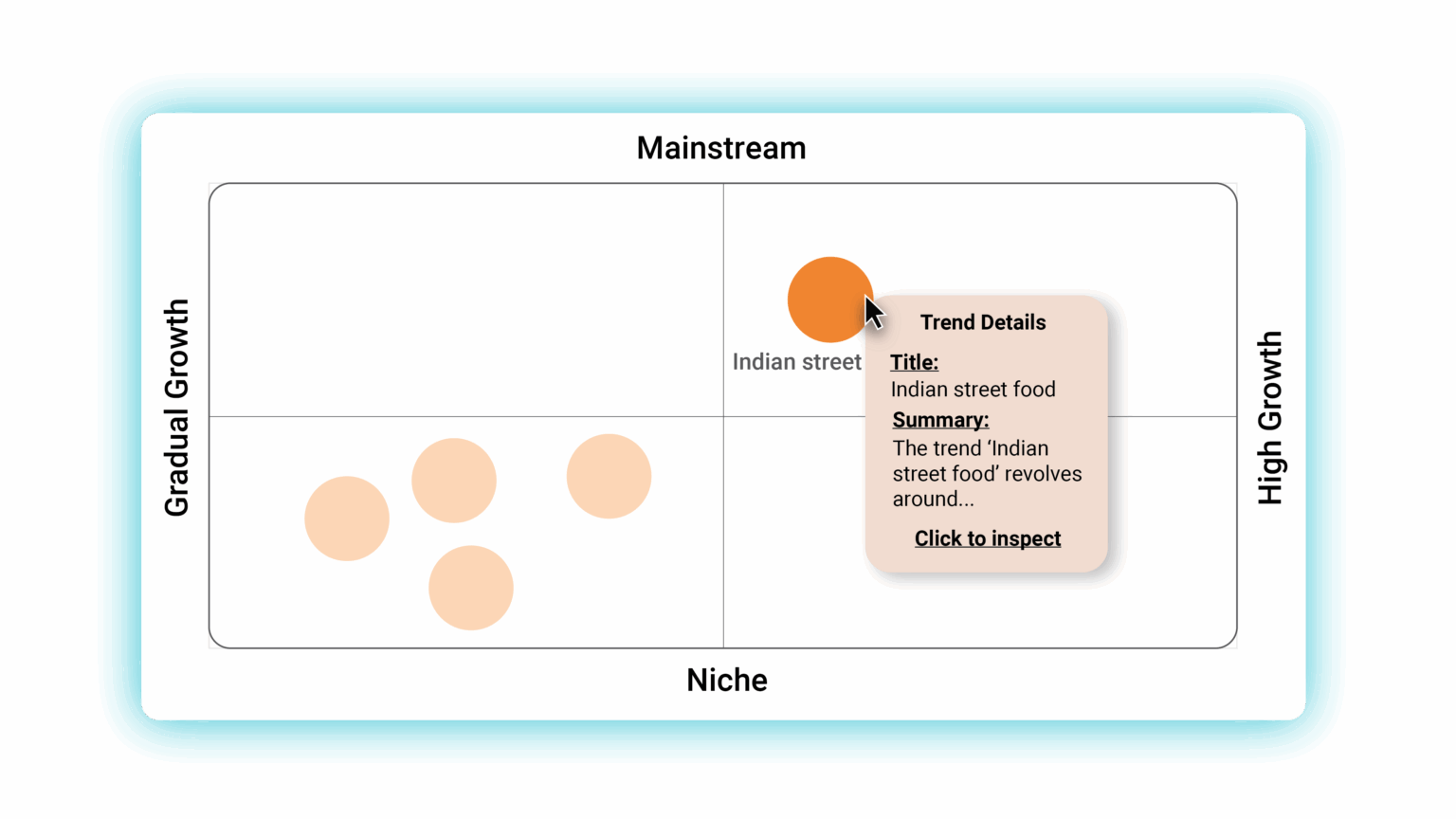
It’s kinda cool, sure? But what does it actually do other than give you a basic view of a cultural movement?
When you know how to use it, and you know the science behind it, the Moments Matrix is actually one of the most powerful strategic tools available to insight teams.
When you know how to read it, here’s what you can do:
→ Sharpen brand strategy: Identify which cultural topics are worth aligning with and which to let go.
→ Streamline product development: Prioritize topics for product innovation by identifying which emerging conversations have cultural traction and momentum.
→ Plan better content & campaigns: Match campaign timing to cultural lifecycles and maximize relevance.
Let’s dig in →
Moments Matrix: Crash Course
The Moments Matrix is a cultural mapping tool that helps teams make sense of the messy, fast-moving world of cultural conversations at scale.
Instead of relying on gut feelings or static snapshots, it uses real-time data from social platforms, search trends, media references, and web traffic to chart cultural topics on a simple two-axis matrix:
Growth (X-axis): How quickly a cultural topic is accelerating across platforms.
Niche to Mainstream (Y-axis): Whether engagement is limited to subcultures or breaking into the broader public.
The result? A clear, visual map that shows whether a trend is accelerating into the mainstream, bubbling up in niche communities, plateauing, or fading away. For businesses, this means knowing when and how to act — whether that’s aligning with an emerging cultural opportunity, pivoting away from something that’s losing steam, or timing campaigns to match cultural lifecycles.
In other words, the Moments Matrix is less about guessing and more about making culture measurable, comparative, and actionable.
 | Dig deeper in the full White Paper |
What does each quadrant tell me?
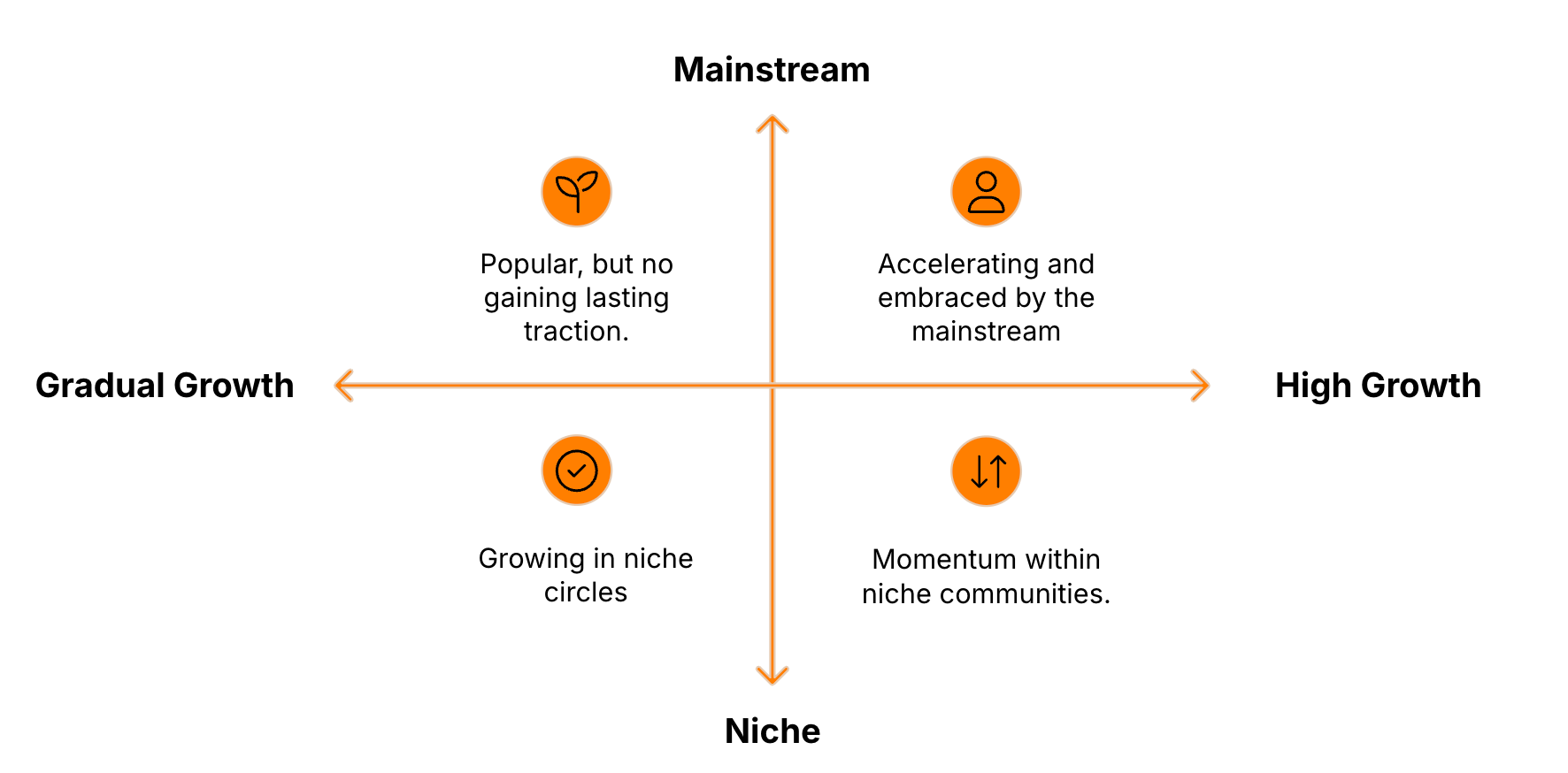
High Growth / Mainstream
Meaning: High-growth movemetns that have broken into the mainstream.
Description: These are fast culture moments—high visibility, hard to ignore, with a lot of public debate and attention.
Implications for brands: Great for content opportunities and timely campaigns. But Khalil warns: “You don’t have to jump into everything”—not every fast-moving mainstream trend is worth joining (e.g., brands rushing into pop culture moments like Coldplay tie-ins).
High Growth / Niche (Bottom right)
What it signifies: Movements are gaining rapid traction in specific subcultures or niche audiences. AI before ChatGPT—fast adoption in niche circles, but not yet mainstream. Once it breaks through, it can suddenly explode into the top-right quadrant.
Description: The conversation is moving quickly, but only within smaller, passionate groups.
Implications for brands: Signals urgency but limited reach. Useful to watch, but risky to overcommit too early — unless the niche audience is your market.
Gradual Growth / Mainstream
Meaning: Large-scale cultural movements that grow more slowly but are deeply embedded.
Description: Resonant across politics, society, and consumer expectations—unlikely to disappear quietly.
Example: Zara’s model controversy—slower momentum but part of impactful across multiple cultural spheres.
Implications for brands: These are structural cultural shifts to plan for long term—guiding strategy, product development, and brand positioning
Gradual Growth / Niche (Lower left)
What it signifies: This is where culture is emerging. Think new stuff, cool kids.
Description: Very few people are talking about these movements yet, but they represent early signals of opportunity.
Implications for brands: This is the sweet spot for close attention—new products, flavors, and ideas with long-term potential often start here. It’s not yet mainstream but can become influential over time
The figure 8 framework
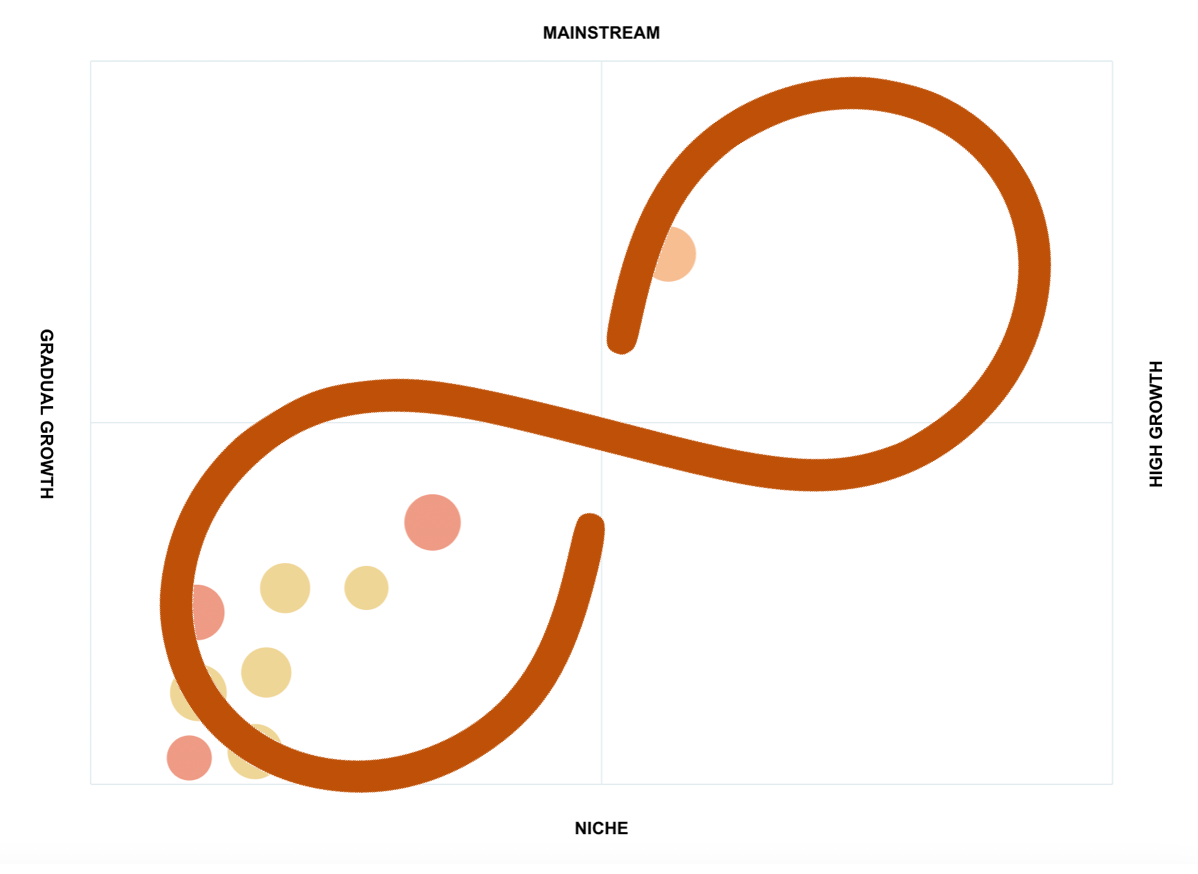
Nichefire’s CRO, Khalil recommends brands think in terms of a figure eight between Bottom Left (emerging niche) and Top Right (fast mainstream).
Why: That’s where cultural sweet spots lie—picking up early signals, then leveraging them when they explode into mainstream visibility.
Want more from Khalil? Check out Lil’ Signals →
📊 Case Study Quadrants
It’s one thing to read about it. Let’s break it down with real cultural movements we’ve picked from the platform:
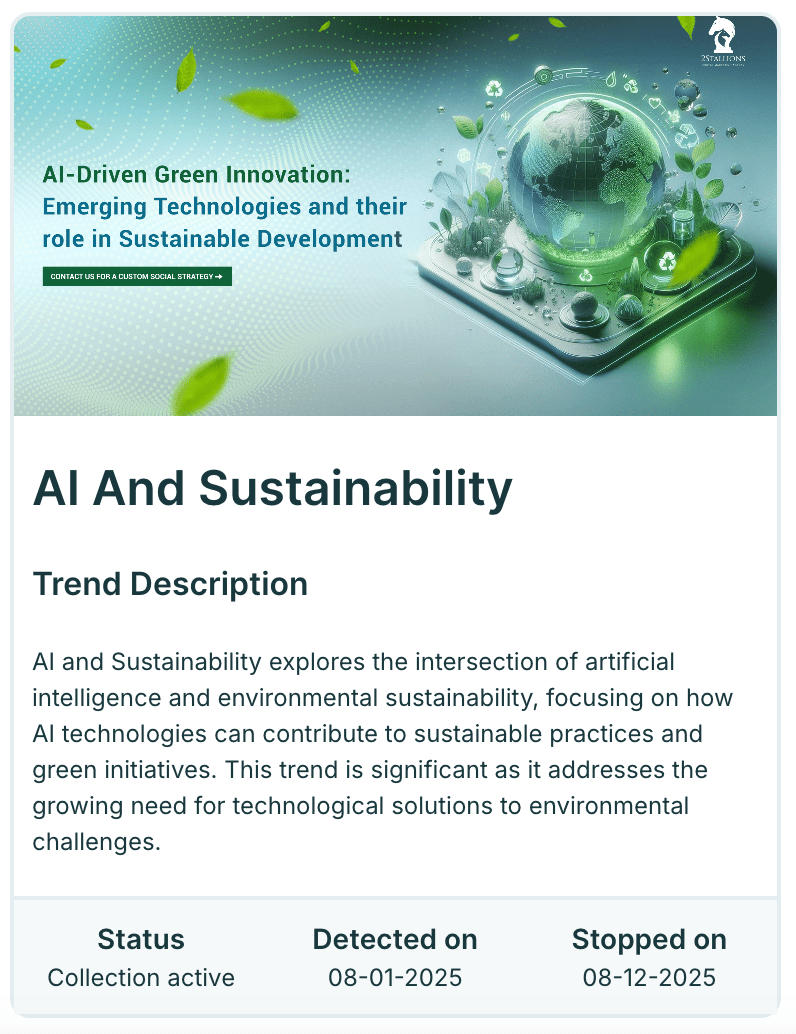 | High Growth / Mainstream:AI and Sustainability** (Top right of the Matrix: accelerating and embraced by the mainstream) AI and Sustainability sits at the center of mainstream cultural debate, where emerging technologies collide with urgent environmental concerns. Conversations are everywhere — spanning politics, industry, and everyday culture — making this a highly visible and impossible-to-ignore movement. |
 | High Growth / Niche — Crypto Payments in 2025(Bottom right of the Matrix: momentum within niche communities — signs of a cultural shift) Crypto Payments in 2025 examines the anticipated adoption of cryptocurrency as a mainstream payment method. With a sharp rise in traction (+29.17% week-over-week), this trend is accelerating in digital subcultures, tech-savvy communities, and forward-looking industries. Discussions on Reddit surged over 700%, and TikTok conversations spiked, highlighting how niche spaces are energizing this movement. |
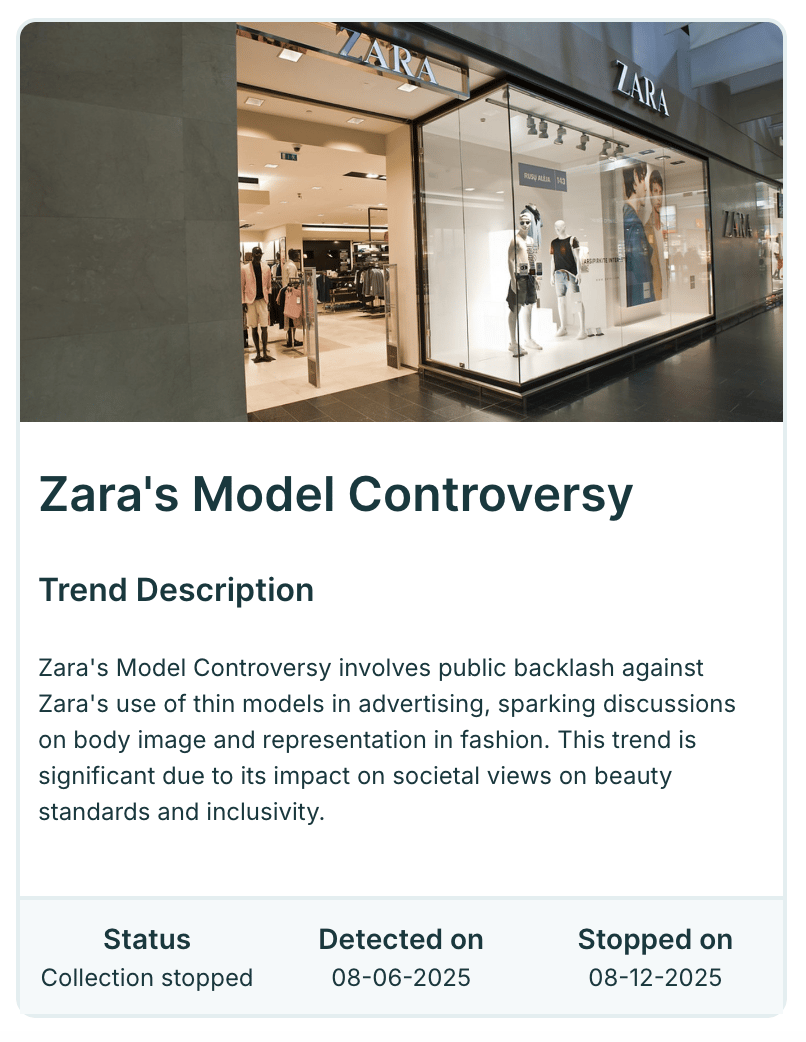 | Gradual Growth / Mainstream — Zara’s Model Controversy(Top left of the Matrix: no longer gaining traction but widely visible in mainstream) Zara’s Model Controversy has fueled widespread conversations on body image and inclusivity in fashion. Week-over-week growth (+6.25%) signals steady cultural momentum, powered by news coverage (+1000%) and community discussions across Reddit and TikTok. While the brand’s use of thin models triggered backlash, the movement’s mainstream traction highlights deeper cultural currents around diversity, ethics, and beauty standards. Its resonance across politics, society, and consumer expectations underscores why it’s unlikely to disappear quietly despite its slow growth. |
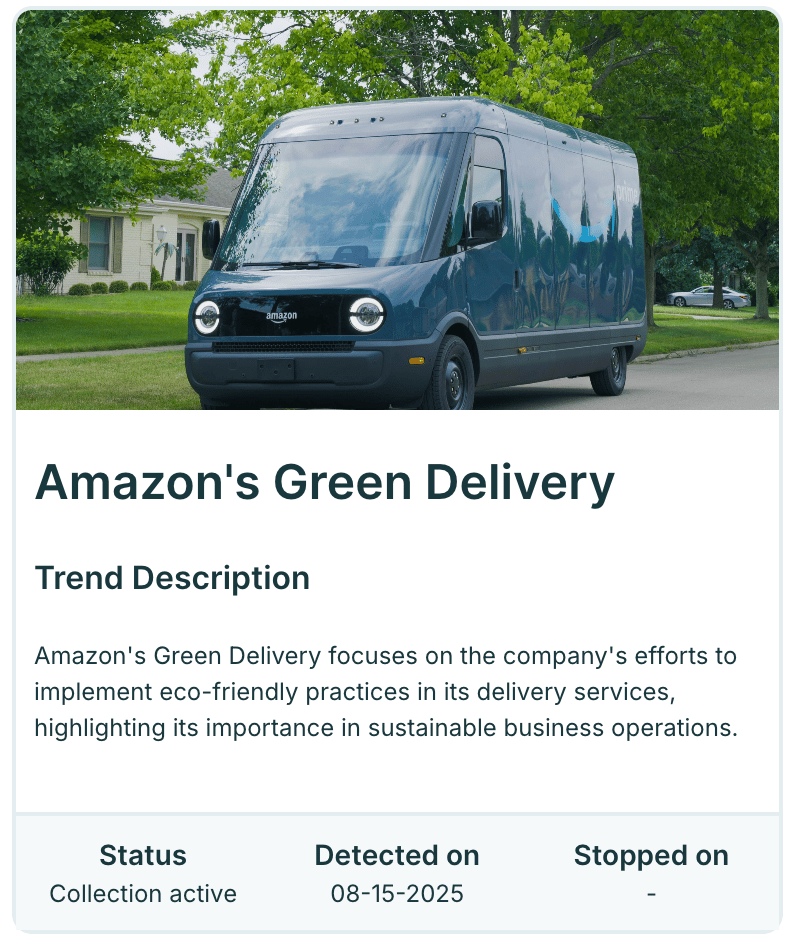 | Gradual Growth / Niche — Amazon’s Green Delivery(Bottom left of the Matrix: remaining niche, but with steady growth) Amazon’s Green Delivery focuses on eco-friendly logistics and corporate sustainability practices. Community engagement on Reddit and intermittent but impactful news coverage indicate rising curiosity around corporate responsibility and greener infrastructure. |
Why teams should learn to use the Moments Matrix
Speed:
Teams can uncover actionable insights faster, reducing time spent on trend discovery and cultural analysis.
Precision:
Instead of “gut feeling,” the Matrix offers data-driven validation to support decisions, leading to more credible recommendations.
Proactivity:
With predictive analytics and emerging trends highlighted, teams can get ahead of the curve, positioning themselves as thought leaders in their industries.
Customization:
The Matrix supports diverse use cases, from crisis monitoring to creative brainstorming, allowing teams to tailor their approach to the moment.
That’s a wrap here - catch us next week with more on culture and our latest certification.